Every RPG has one quest that people remember. Good games have a good main quest, maybe it’s the overall story or just one specific section that connects with the person playing the game. But great games, have the same thing with their side quests. It’s more immersive if even the side quests feel fully fleshed out and engaging.
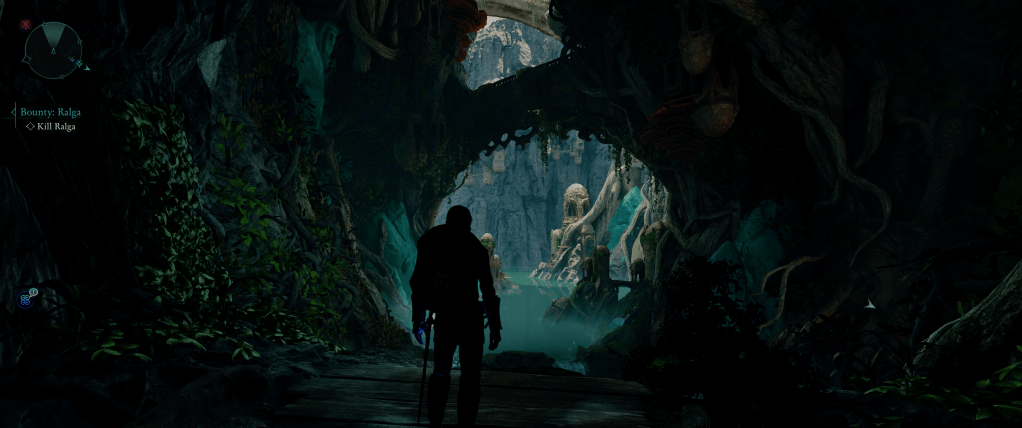
I recently completed the Dawntreader quest in Avowed, and this fits right in that mold of a great side quest. It’s got some rough edges to it, but I still feel like it’s got a lot going for it. I think my favorite part is that I stumbled across it. I was exploring, trying to get to a new part of the map, and found a small canyon that I could go through. I stumbled upon some NPCs arguing and was asked to go into the temple of Eothas, a god in the game that not many are a fan of currently. There’s some backstory to this god from previous games in set in the same universe. In Pillars of Eternity 2: Deadfire, Eothas enhabited a giant statue and strampled through some islands and caused all sorts of chaos. So a temple to him is probably not going to see a lot of visitors. You’re tasked with finding a group of soldiers who have gone in to find some relic and haven’t returned. The temple itself is filled with traps as it acts as a kind of a pilgrimage, and those who make it through are deemed worthy to talk to the steward of the temple.
With all that set up out of the way, one thing that I realized I liked about this quest is that it gave reason to why there are traps and puzzles in this cave. It also gave reason as to why things might be dilapidated in this temple as well. The traps are to test those that are worthy, but no one is a fan of this god, so it’s not being maintained as much as it used to. Also, it does speak to how less is more in this game. This was the first dungeon that reminded me of Skyrim, but I enjoyed it more because it felt more fleshed out and, so far at least, it feels like they aren’t going to pack the map with a dozen of these types of dungeons, with slight tweaks. It was also just a gorgeous area, and that could also speak to if you’re not going to do a dozen of these, you can really focus and expand what’s available.
But it wasn’t the gameplay that stuck with me the most in this quest. It was the story and Sargamis, the steward of the temple you meet as part of the quest. I’m going to do my best to not spoil the quest and I won’t focus on the multiple different endings that are available for the quest as I think the choice really needs to be yours as to how you navigate this story. But I do need to spoil the main tension point of the quest, where you find out that Sargamis is building a giant statue of Eothas in the temple, and the relic he protects is a piece of that god. He wants to use that relic and some sketchy materials to summon his god and trap Eothas in the statue. This isn’t a mandate from his god, and he’s not trying to bring about some cataclysm in the name of his god. He wants his god to be accountable for his actions in the previous game.
This part was really interesting, and what hooked me on that quest. This steward is a godlike, like you, but he was previously able to talk to his god and act as a conduit. But after the events of Deadfire, he hasn’t heard from his god, and he’s struggling with how to serve a god that caused so much hurt and damage. He isn’t a fanatic that is blindly serving his god since he struggles with the fact that his god did something wrong and wants to see if he can get his god to atone for their actions. So he stumbles and commits some sins of his own, but it’s almost like he does it for his own salvation as well as that of his god’s. He is the patron of Eothas, it felt like he felt guilt for being tied to a being that caused so much hurt. So maybe he’s trying to make sense of all that and the only way he can is to force his god to face judgement, like a mortal would.
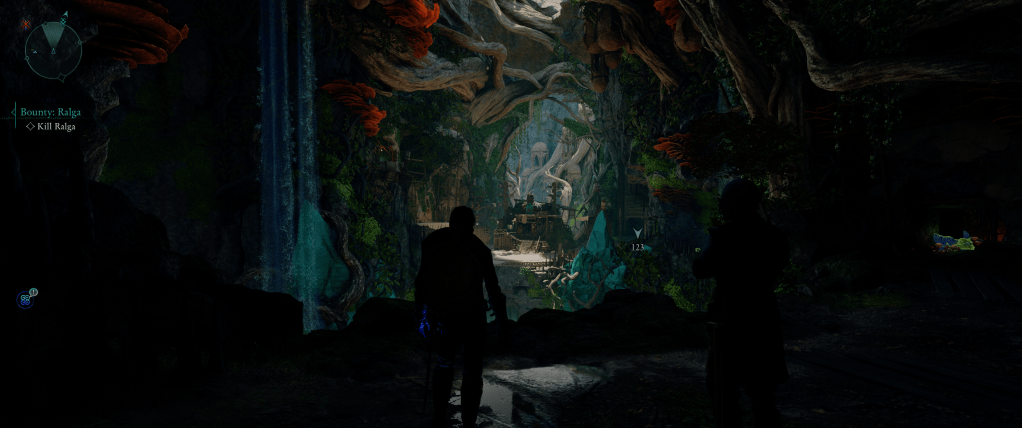
It’s a great quest for its world building, but also, if you let yourself get immersed in the game, it’s a quest without an easy answer. If you you look at it logically, yeah, just punish Sargamis and loot the body and move on. But if you can let yourself get swept up in the story, maybe you’ll feel pity for him, maybe you’ll let yourself feel anger at the selfishness of his actions. You still might make him face justice, but you might understand the hopelessness he’s feeling in serving a god that everyone hates or fears. It helps put into stark contrast your character who is also a godlike, but hasn’t heard from their god yet. Once you do, is this the fate that awaits you? A loss of agency and devotion to a being you might not agree with? Obsidian really is good at giving me quests where I have to think about which option is the best and the consequences. CD Projekt Red did the same with the Bloody Butcher quest in Witcher 3 and here this quest is self-contained, it doesn’t have a wide reaching impact on a region after you complete it.
But maybe that’s for the best? If a game has a story to tell, it doesn’t have to have earth shattering consequences, maybe it just needs to have an impact on you. I think sometimes fans lean too much into the idea that their choices need to dramatically shift the world. It’s cool when it does, but that’s hard to create and there’s only so many times you can do that in one game. I like this quest being tucked away in its own corner of the world and I like that it asks big questions, but doesn’t give you one answer. I also think its strong storytelling if you can make me feel pity, or really any emotion about a character, good or bad. Back in the day, games had good vs evil mechanics where your character would be given choices and you could shape your character based on what you chose. They were really black and white, I remember in Infamous: Second Son there was a pretty disconnected choice of protect your family or throw them to the bad guys and I just felt the only reason someone would pick the “evil” option would be to see what happened or because they were doing an evil playthrough. But I think grey areas are much more interesting, like this quest. You don’t get good or evil points depending on your choice, you’re left thinking what would your character do and I think its good game design if you’re able to hesitate, for even just a second, when making your final choice.


 Playthrough
Leave a comment