I recently decided to give Death Stranding another shot. I bounced off the game pretty early on because the way I thought combat was handled in this game stressed me out. If you kill anyone in this game, and you don’t take care of it, it causes what’s called a voidout. Pretty much the area explodes, changes the map, and that area stays messed up for a bit. So it disincentives lethal combat, and I didn’t think there were the tools for that. So it made me feel like all encounters should be avoided, and there’s a part where that can’t happen, so I stopped playing. Which is something I’ve noticed in myself before I would go for whatever option was the messiest, seeing if I could do it. But now, with my limited time, I want to make sure I’m getting the most out of that time. So, if something causes me to waste that time, I’m less inclined for the risky maneuver.
Which, yes, is maybe a little silly. Especially since I decided to actually look into it, and the game does have non-lethal options to avoid the stress I was dreading. I feel like this is Kojima continuing the conversation he dabbled in with Metal Gear Solid 3: Snake Eater and some later games. From my memory, Metal Gear Solid 2: Sons of Liberty was the first of the modern Metal Gear games that let you go fully non-lethal. But it was MGS3 that had story repercussions if you stuck to it. That game had a boss called The Sorrow, and it wasn’t really a boss fight. It was more about making you walk through everyone you killed in the game up to that point. So if you did non-lethal, it was a pretty short scene, but if you didn’t…it was a very long walk. So, Death Stranding is a more direct conversation, there’s gameplay repercussions if you kill, and it kind of goes against the whole point of the game, which is reuniting the country after the world ends.
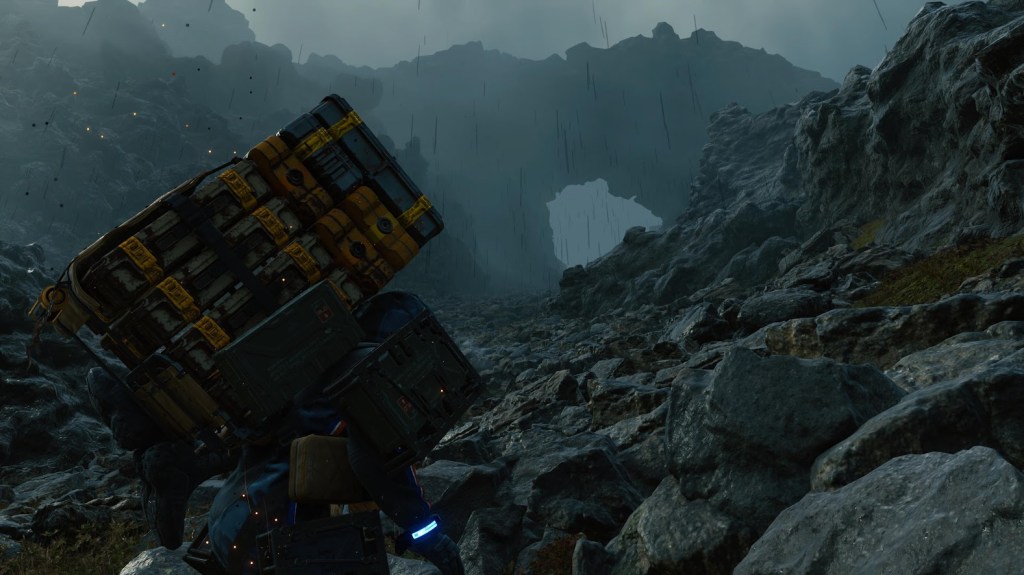
I will say that giving us lethal options and then making it very clear we shouldn’t use those is a bit of a false choice. But I feel like it’s more about saying you can choose violence, but it will make the game harder for you, so is violence really worth it? It’s crucial that the story doesn’t change here. I know Dishonored at a similar mechanic, but I didn’t like how you’d get the dark ending if you went lethal. I’d prefer that the story stay the same, so if I mess up or decide the consequences don’t matter, I don’t feel like I’m being punished narritively. This is very specific to me, though, as others will see Dishonored’s mechanics as showing you do have an impact on the world.
I’m having fun running deliveries, walking through a very pretty world. It’s a very unique puzzle of trying to find the most efficient way from point to point and figuring out what risk you’re comfortable with. It’s also great when it’s a new area, as you haven’t connected that area to the country’s network yet, so it’s all on you to figure it out. But, once you do connect that area to the network, player structures fill the map and make traversing the map easier. I like that I still have to figure out the area on my own first and I usually get ideas of how to improve my route with my own structures because I’m on my own for the first run. It also doubles down on what I feel is Kojima’s ethos for this game of positive intent in gaming. So, you can build structures for yourself, and that will benefit other players, and players can like each other’s structure, which is a way to level up your ranking in the game. You can also help upgrade these structure as well. You’ll also find packages that some players might have had to leave behind, and you can finish deliveries for them. That or if you can’t, you can put that package into the delivery system, and another player can pick it up as a job and finish it for you. The game also has shared lockers where you can share items with other players to help them out. So non-lethal is pushed as the main way to play, and the game is built around players helping each other out.
The story for the game is very heavy-handed. Which is kind of Kojima’s jam and has been for a while. I will say that at times, I’m having trouble following the plot, but I can’t say I’m not sucked in. Sometimes, yes, dialogue can be a bit cheesy, and stories can pivot or resolve with a sense of whiplash. But I can’t say I’m not invested or sucked in. Kojima loves film, and you can see it in his cutscenes. Yes, they are very long, but they are engaging, and I appreciate that the camera is never just static. Think of a conversation in a standard RPG where the camera might move a bit here and there, but it will mostly be static. I feel like this makes me become complacent and want to skip the conversation, especially if the text is scrolling at the bottom and I can finish reading the dialogue before it’s done being delivered.
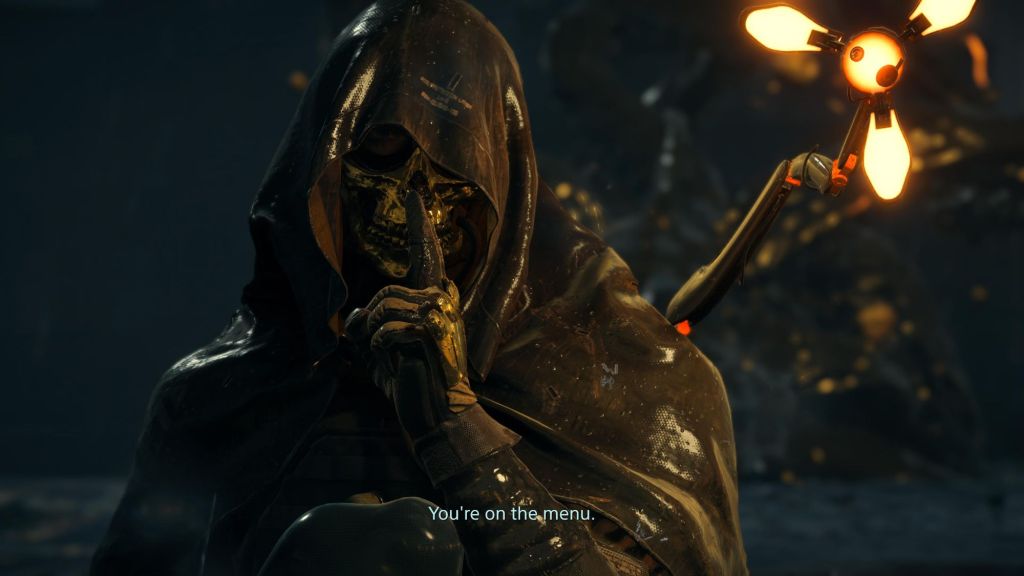
But Death Stranding feels cinematic, and I feel like paying attention. Films can have long scenes of dialogue, and, if done well, you’re not going to tune out of that scene. Sometimes, I feel Kojima might lean a bit into the crazy side of his stories, and maybe he feels like that’s enough from a story perspective. But overall, I can tell he appreciates film, and I’m glad he leans into those skills. I think of some JRPGs I’ve been playing, such as Infinite Wealth and Persona 5, where yes, big things are happening in the story, but I’m on auto pilot, trying to get through it all. When I think of cinematic games, I think of games that can pull me into their stories. It’s not just games that simulate the action we expect from action films, but the ones that can pull from drama that I think really thrive.
I’m glad I looked back into how Death Stranding works. I know I need to be better about accepting risks, and if things don’t go my way, well, that’s just tough. Death Stranding can be relaxing and fulfilling, but it can also be stressful. I may get to the end of this game, not understanding a single thing, but at least I’ll have appreciated the journey.


 Playthrough
Leave a comment